
Today, with the strong development of the economy and society, many lighting sources with a variety of modern devices such as traffic lights, billboards, restaurants, bars, industrial production facilities, factories, shopping centers, … have caused an alarming situation of light pollution.
According to statistics from Science Advances Magazine, up to 80% of the world’s population lives in a state of light pollution, especially in Europe and the United States, 99% of people are severely affected by light pollution. Currently, light pollution in Vietnam is becoming an urgent problem, especially in large cities.
What is light pollution?
Light pollution is not a new concept today but has not been widely popularized to the people. In particular, light pollution also causes many consequences that affect the quality of life that we need to pay attention to.
Light pollution is the use of light for the wrong purpose or the excessive abuse of artificial light, causing discomfort to people. Below are common types of light pollution that we more or less experience every day.
What types of light pollution are there?
Light trespass: This type of light pollution occurs when light invades other people’s territory in a way that they do not want. For example, being illuminated by lights from the house next door causes insomnia due to too strong light or people traveling on the road with lights that limit other people’s night vision
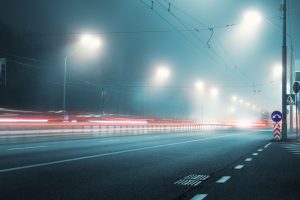
Glare: This type of light pollution is the contrast between light and dark in the field of vision. If light is shined directly into the eyes, traffic participants can lose vision for up to 1 hour.
Over-illumination: Light pollution caused by excessive use. A typical example of this is the over-illumination of light in the US, which has wasted about 2 million barrels of oil per day.

Light pollution in the US
Clutter: Light pollution caused by the phenomenon of too many beams of light appearing at the same time, causing distraction to the human eye. This type of light can be seen a lot on the streets when lights and light sources are emitted from many directions.
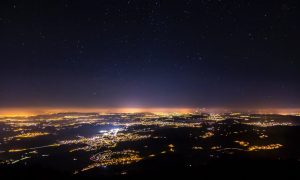
Sky glow: Light pollution caused by the type of light that often occurs in densely populated areas with many halos, light emitted from many different sources and reflected into the sky.
The harmful effects of light pollution:
Light pollution has caused many direct and indirect harmful effects on our health and quality of life. These harmful effects include: causing fatigue, stress, anxiety disorders, physiological decline, circadian rhythm disorders, and even causing cancer.
In addition, light pollution also causes energy waste because lighting accounts for ¼ of the world’s energy consumption, of which 50% to 90% is unnecessary light in buildings.
On the other hand, light pollution also disrupts the ecosystem, disrupts the biological habits of living organisms, leading to a reduction in the number of species and many species are at risk of extinction.
What should be done to limit the current light pollution situation?
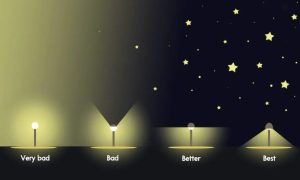
Although this problem cannot be completely overcome, we can limit light pollution by:
– Turn off lighting equipment when not in use for a long time.
– Do not use too many lights for the same area.
– Use the correct function of each type of lamp and use lamps with appropriate lighting capacity to avoid wasting energy and money.
– Do not turn on high-brightness lights all night in unnecessary areas.
– Use energy-saving LED lights and limit unnecessary light emission into the space.
– Choose lighting models with timer capabilities, flexible light intensity adjustment and remote control.
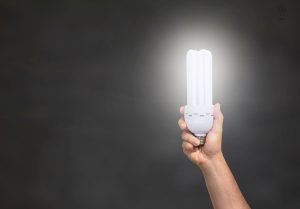
Use LED bulbs to save energy and avoid light pollution


