

The Vietnamese textile industry faced challenges in 2023, despite not achieving expected growth. However, this year, businesses in the sector demonstrated efforts to overcome difficulties in securing orders and maintaining operations.
Mr. Than Duc Viet, General Director of Garment 10 Corporation, mentioned that in addition to leveraging opportunities from Free Trade Agreements (FTAs) to establish links with raw material manufacturers for complete supply chains, Garment 10 and other companies also actively explored and learned from each other’s production models. This led to collaborative efforts in management, production processes, market positioning, customer targeting, and product line development.
Tran Thanh Hai, Deputy Director of the Import-Export Department (Ministry of Industry and Trade), observed that Vietnamese textiles have expanded into 104 export markets, including new ones like Africa, Russia, and Islamic countries, reducing dependence on major markets.
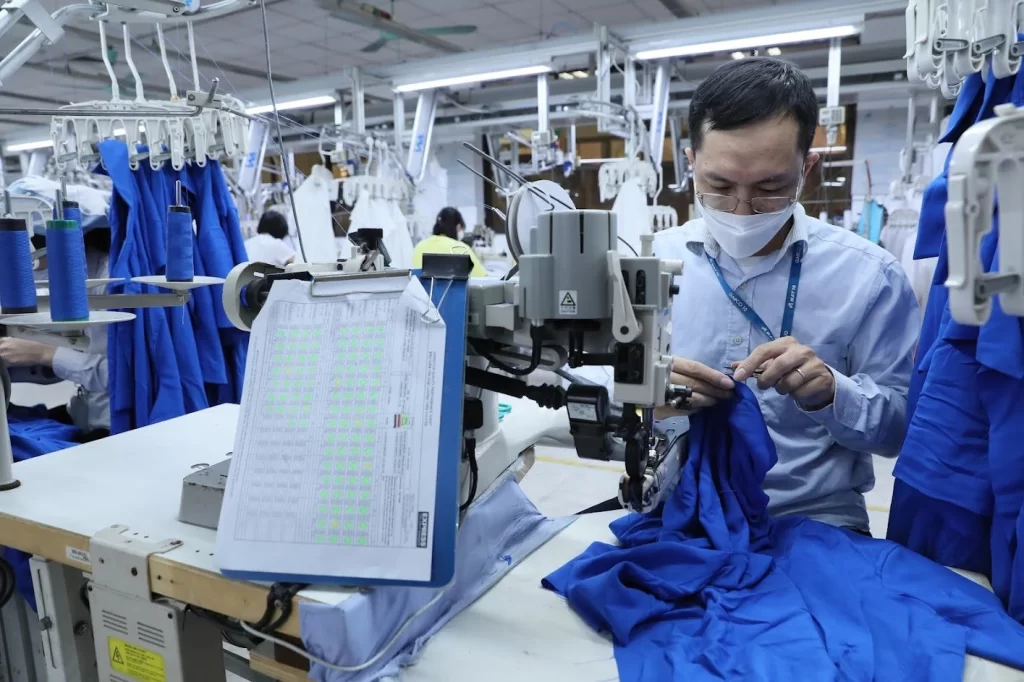
However, Mr. Hai warned of competition with Bangladesh, already advancing in green transformation, whereas Vietnam is still in early stages. Therefore, the textile industry needs to focus on green raw materials and recycling, increasing the proportion of recycled yarn in fabric and organic fibers in new products. Immediate investment in technology and control from raw materials to product design, development, and production organization is essential.
Considering global economic recovery prospects and Vietnam’s economic forecasts, the textile industry aims to increase its export turnover to $44 billion in 2024, a 9.2% increase over 2023. To achieve this, the industry faces significant challenges regarding market requirements. Economist Can Van Luc suggests the industry should restructure operations, control financial risks, including interest and exchange rates, and proactively explore support programs, particularly fiscal, tax, and credit packages.
“The textile industry needs to diversify capital and markets, partners, and supply sources; focus on green production and consumption and circular business practices; implement digital transformation strategies aligned with technology investment, digital personnel, data, and risk control,” emphasized Mr. Luc.
Source: CafeF


